
Interview: William J. Mann on Iconic Fiction and Hollywood History
The biographer and film historian looks back on his canon of work and hints at what's next

William J. Mann is the author of the highly-acclaimed “Boys” trilogy — The Men from the Boys, Where the Boys Are, and Men Who Love Men. But Mann is also a historian and the author of ten books that delve into the lives and times of Hollywood legends like Katharine Hepburn, Elizabeth Taylor, and Marlon Brando, as well as the political dynasty of the Roosevelts and the true crime story of the 1922 murder of William Desmond Taylor, a Hollywood mover and shaker, in the 2014 book Tinseltown. Through his work, Mann has told the story of Hollywood as a place where LGBTQ+ people — although often in the closet — made a profound impact on global culture.
With his upcoming book Black Dahlia — due out January 27 from Simon & Shuster —Mann returns to the true crime genre, probing the 1947 murder of Elizabeth Short, as aspiring actress whose murder and mutilation shocked the country and exerted a hold over the popular imagination that has never let up. Similar to Tinseltown, in which Mann identified a probable suspect others had long overlooked, Black Dahlia “promises to be the definitive study about the most famous unsolved case in American history” (as the book’s page at the Simon & Shuster site has it).
Mann and I caught up in early 2024 with a conversation that looked back over the ten interviews we’ve done over the last two decades. The new interview was intended for a different publication that never published it; with Black Dahlia’s publication only a few months away, the time is right to revisit this chat, recall old times, and ponder the future.
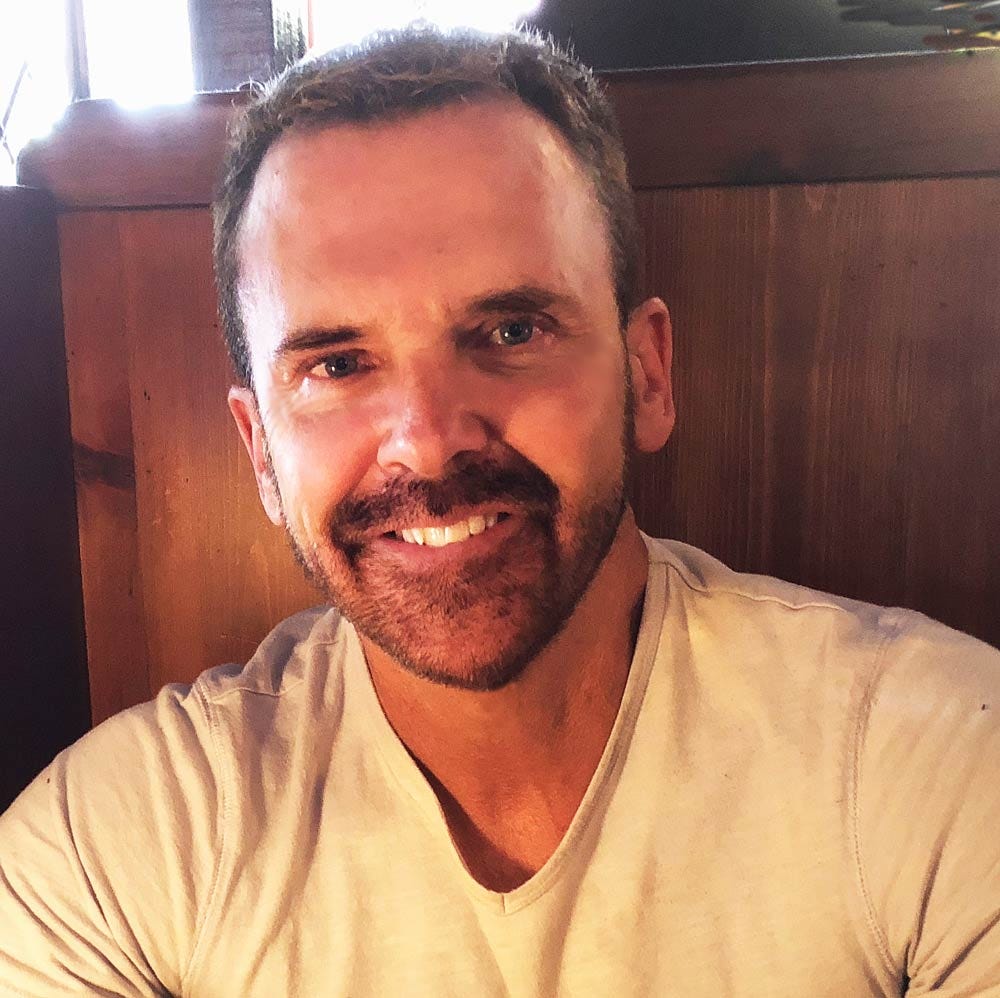
(Photo: William J. Mann. Courtesy of William J. Mann)
Kilian Melloy: Our first interview was in 2005, right after the publication of your novel All American Boy. You said at the time that you were never an “assimilationist” – you always wanted to live in gay ghettoes like DuPont Circle and West Hollywood and Provincetown. Gay ghettoes have been disappearing as LGTBQ+ culture goes mainstream, so do you still feel you’re living in the midst of gay culture?
William J. Mann: So many of the gayborhoods, as they were called, have disappeared or become something slightly different. Provincetown, where I live, is still pretty gay. It's part of the culture of the place, but then again, Provincetown is a place where artists and outsiders have always come. That feeling is still important to where I live.
I think probably I would amend my statement from back then to say that I would want to live in a community that shared my values. We lived in a town in Connecticut, which was lovely, but it at election time it was always right on the edge. Sometimes it went blue, sometimes it went red. I think it's important that we don't isolate ourselves, especially when we're young, but at my age I feel like I can't be in a world that doesn't listen to science, or believes misinformation, or scapegoats people. I can't imagine living anymore where we were in Connecticut because of that.
Kilian Melloy: When we talked for the first time, we didn't have the right of marriage equality outside of Massachusetts, and we hadn't gained the kind of general acceptance we have now — we certainly didn't have Generation Z, more than a quarter of whom say they are something other than straight and cisgender. Do we at least have a solid foothold in the culture now that might stop the backsliding we’ve seen happen?
William J. Mann: It's hard to say. As a historian, I [know how] the pendulum [has swung] back many times, not just around queer issues, but immigrants’ rights, women's rights, separation of church and state. Around the world, there is a move towards this right-wing authoritarianism, and I can't make sense of that in terms of today's world. I can only compare it to what I know happened in the past. If you want to talk about how today looks in many ways like early 1930s Europe, [or] to the McCarthy era in the 1950s, I can give you those comparisons, but I'm not able to predict what happens next.
If history is any guide, then the pendulum will swing back, and we will correct many of these things. I think it goes to what you just said about generations. This is a generation that has grown up with a certain worldview that authoritarianism is diametrically opposed to, and I can't imagine that young people would just roll over and say, “Okay, we now accept that queer people can't get married,” or whatever else this new world order would try to put into place. We already see the backlash to the overturning of Roe v. Wade, so I feel like there is something happening even though we're in this precarious moment — at least I hope so, because it's what keeps me going every day. Having taught college students for nine years, teaching queer history among other things, I know these young people, and they're not going to just sit back and let it happen.
Kilian Melloy: How has your thinking about relationships across generations in the gay male community evolved over the last couple of decades?
William J. Mann: One of the one of the great advantages of being part of a gay community is that we can learn from those who are older than us. I did, certainly, when I was in my 20s and 30s.
You and I both came through the HIV epidemic. Having seen some of my mentors die, you really get a sense of who we are and what we're up against. I think that's still true today. Some of my students would say to me, “I wish we had the kind of community centers and bookstores and gathering spaces that you did, because we don't have that immediate access.” Even gay bars have declined, and the gay bar setting was always a place where younger and older people came together.
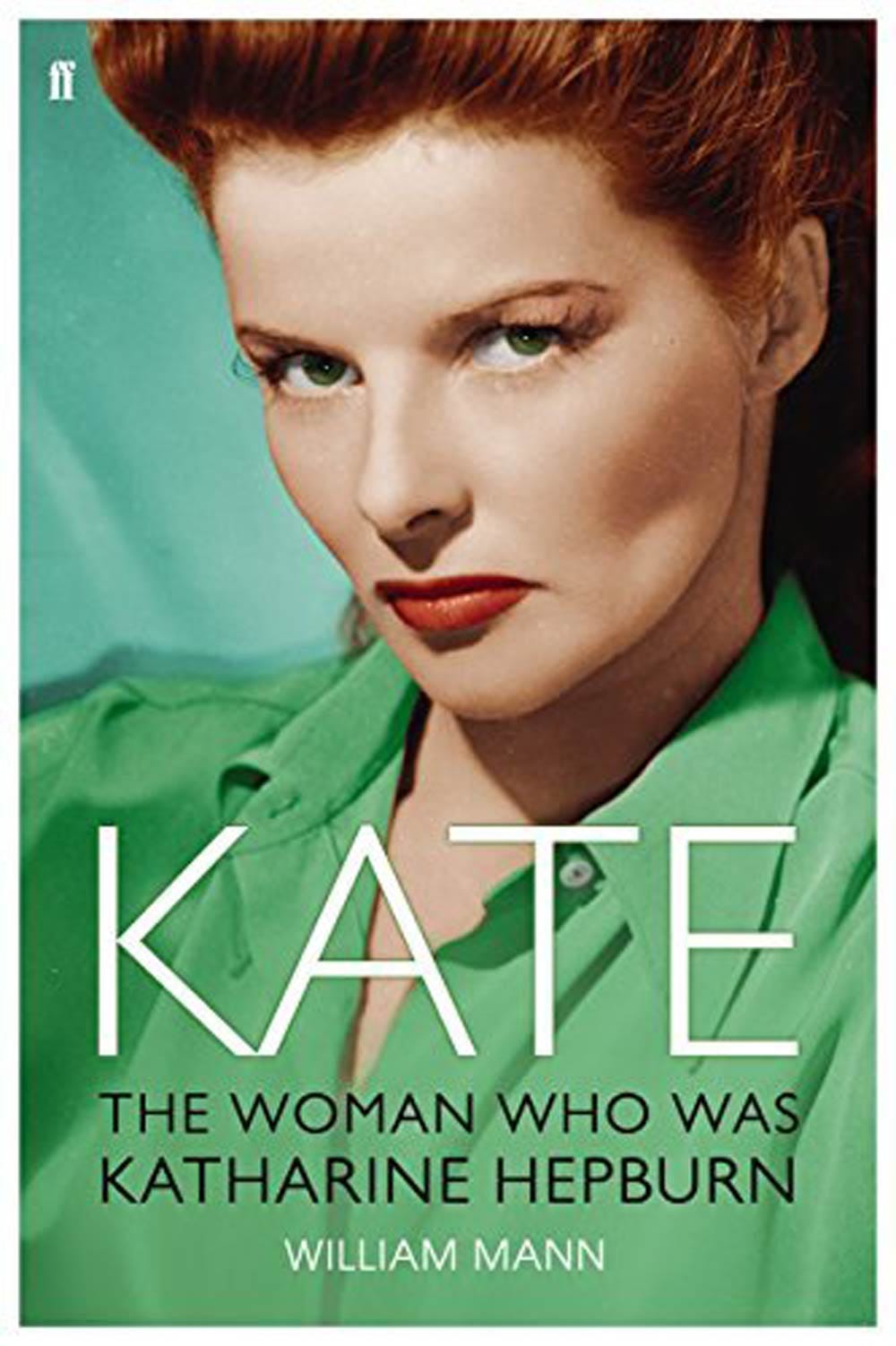
Kilian Melloy: When we chatted the second time, in 2007, it was about your biography of Katharine Hepburn, who is something of a gay icon. Since then, you’re written deeply researched books about Elizabeth Taylor, Barbra Streisand, Marlon Brando, The Roosevelt Family, and, most recently, Humphrey Bogart and Lauren Bacall. In your mind, are there commonalities or connecting threads that tie this broad array of works together?
William J. Mann: Yeah, in many ways. When I started out writing about Hollywood, my first book was on William Haynes, who was an openly gay actor in the early 1930s. In that book, I set the template for what I was going to do for most of my other work, which was look at these stories, how they were sold, how they were manufactured, and then find out what the reality was behind the stories and explore that tension between public and private lives. Oftentimes that's been about their gay identities, but it's also been, with somebody like Marlon Brando, about image. [In Brando’s case, the image is of] the greatest actor of all time, and then he turns mercurial and narcissistic and arrogant. But, in fact, that's not the story of Marlon Brando at all. There's a whole other story that I tried to reveal.
So, those are the kinds of things I try to do. “Okay, here's what we think we know about these people. Let's explore that and try to go back to how these stories began, and why they began.” I think that ends up giving us a much more rounded and interesting portrait of these icons.
Kilian Melloy: I wonder if the mythmaking today — which happens in real time and is constant — is liable to leave today celebrities with no humanity at all.
William J. Mann: I think over the last 20 years celebrity has morphed into this nonstop virtual phenomenon. How do you separate the fiction from the fact? What's real and what's not? I wouldn't want to be trying to write a book about them.
With some notable exceptions, most of the celebrities that my younger friends talk about today do not have the interest that somebody like a Katharine Hepburn or Marlon Brando had. [With] so many celebrities today it seems not to be about the work they do or the message they're sending; it's simply about the number of followers that they have. I'm sure that at their heart these media celebrities, these social media influencers, are human beings, and they have dreams and goals and fears and doubts. But to decode that, to find out who they are, is a lot more work than I would want to put into it.
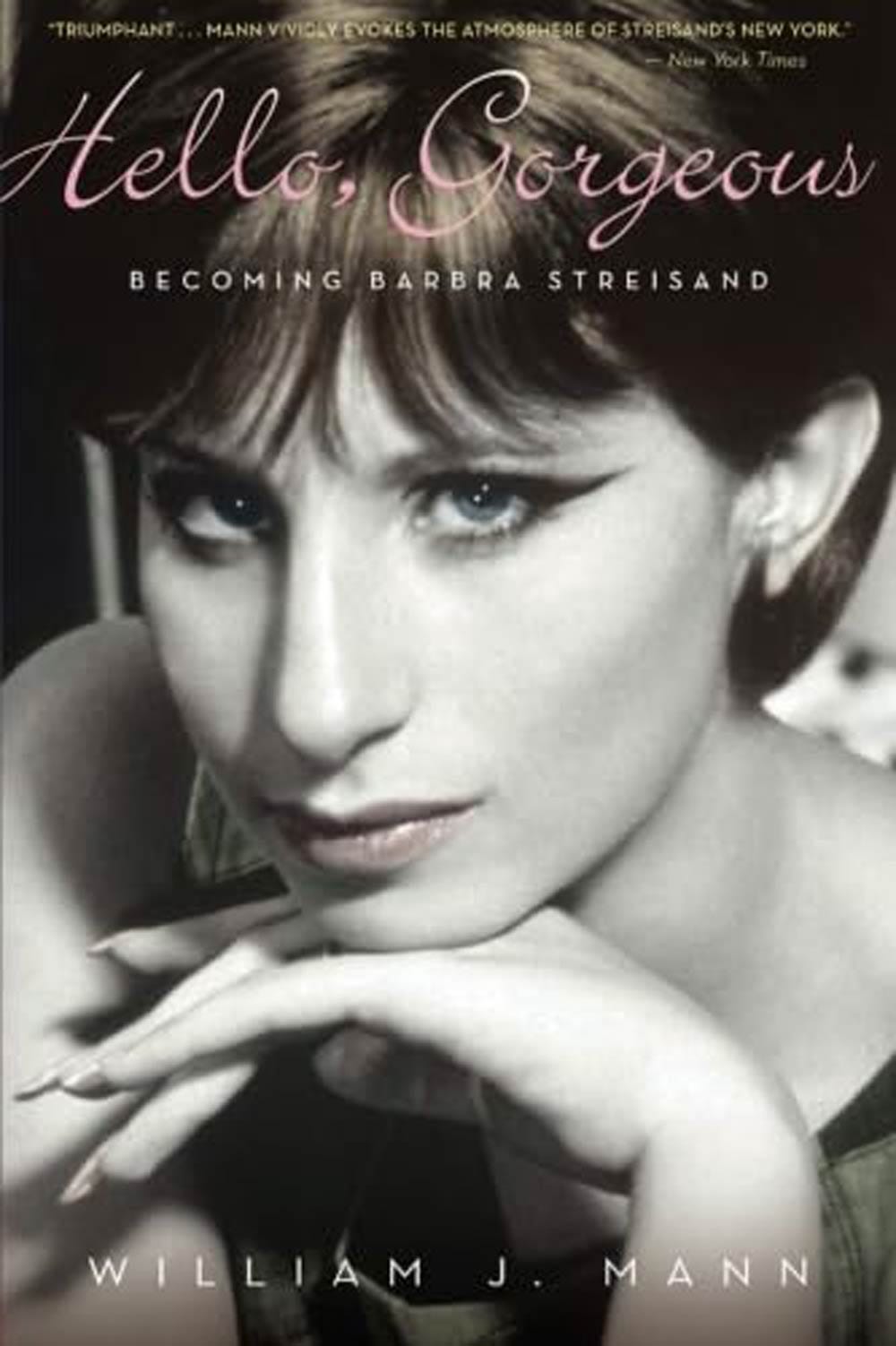
Kilian Melloy: One of the big mythmakers you've covered is Barbra Streisand. When she came out with her memoir, I thought back to when we talked about your bio of her and you mentioned people in her camp were extremely nervous about what you might have dug up in your research. Have you read her memoir?
<slug>William J. Mann:</slug> I have not. God love Barbra Streisand. She's one of the greatest performers of all time. But biographies of Eleanor Roosevelt were not as long as hers, and I just felt that a volume like that… I'm certainly not going to start wading through it. I'm glad she wrote it, because getting her viewpoint and her perspective on things in her life is important. I'm sure a lot of fans gobbled up every word of it, but no, I didn't attempt to read it.
I know some of the people that I interviewed for my book — people who knew her when she was very young, because of course, my book ended in 1964 — they felt a little slighted, especially some of the gay men who helped mold and shape her. I can imagine Barry Dennen would feel slighted. [Editor’s note: Dennen was the author of the 1997 book My Life With Barbra: A Love Story.] She kind of dismisses him in a couple of pages. I think he was much more influential on her life than she wants to admit to herself. I knew Barry; he was a good guy. He took a lot of pride in how he had helped her, and he was very proud of her. I just felt that he could have been acknowledged a little bit more.
Kilian Melloy: Books were once a more popular form of entertainment, and now people are binging whole seasons of TV or limited series instead. Do you feel like this is a laudable evolution for storytelling, or are we losing something?
William J. Mann: Well, of course, I love books. There's nothing more enjoyable than to curl up with a good book. But at the same time, I love this new medium of storytelling, this streaming. I used to think I would only want one of my books be made into a movie; now I think it should be made into a limited series, because then you've got so much time and so much canvas to tell these stories. I loved Fellow Travelers with Matt Bomer and Jonathan Bailey; that was so good, and, overall, historically really accurate. So, I do love that form.
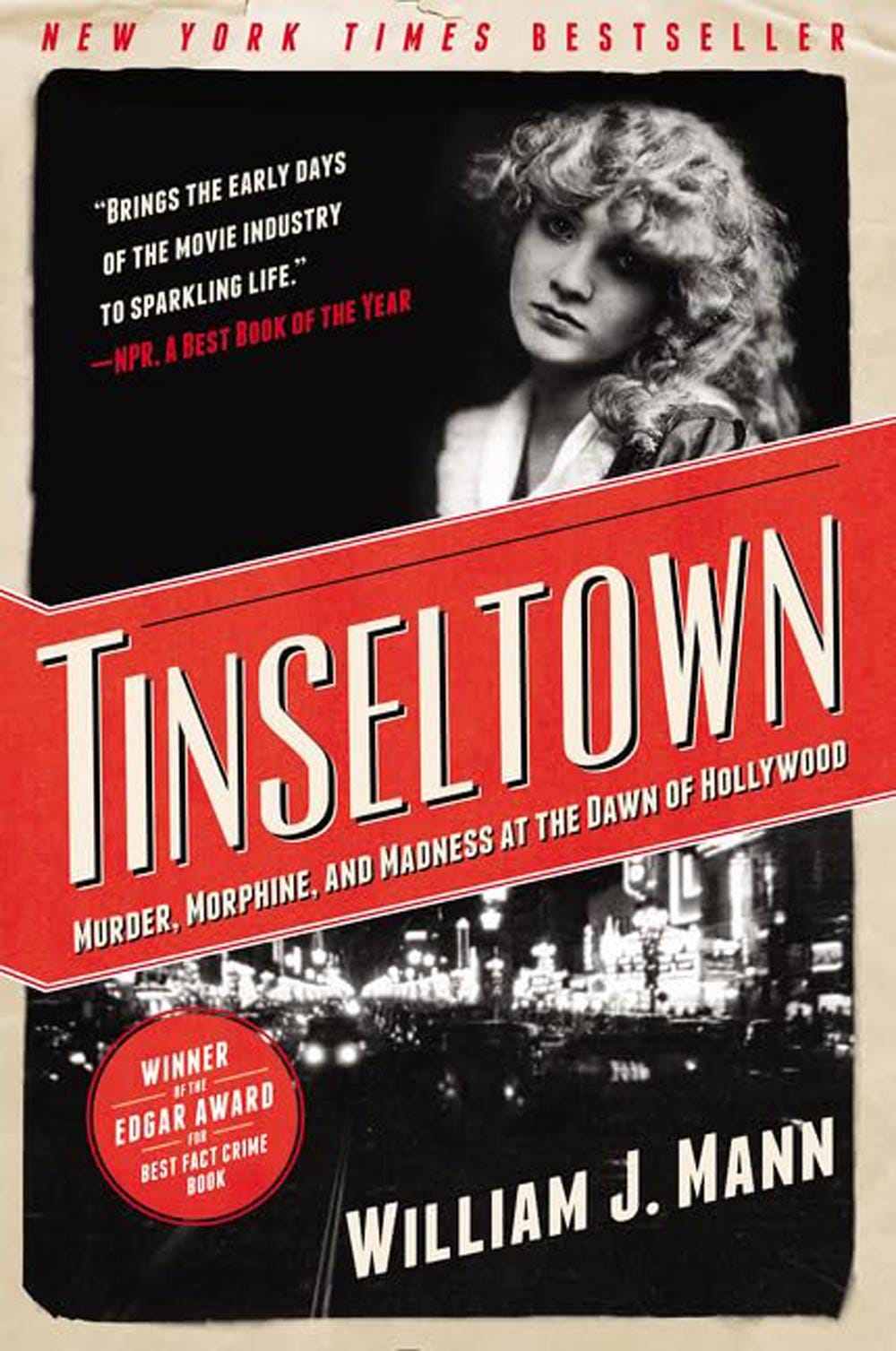
Kilian Melloy: There was talk of your true crime novel Tinseltown being adapted into a miniseries. Is that still in the works?
William J. Mann: Tinseltown came very, very close. We had a script. We had a director. We had Paramount! I'm not saying that COVID killed it, but COVID certainly didn't help, because everything got put on hold. We had started talking about how even location scouting would have to be done online, with someone with a camera [uploading pictures], and then everything just kind of ended. Months went by, and I wasn't hearing from them anymore. Then [the word was], “We just we just don't have the bandwidth.”
That was a huge disappointment because I had been very involved. I co-wrote the script with a terrific co-writer, Kevin Murphy.
Kilian Melloy: How did you like writing for television?
William J. Mann: Writing the screenplay for Tinseltown was such an exciting experience. It's a whole other medium. As a historian, when I'm writing my nonfiction books, I have to stay true to the facts. Even though I'd say something like, “This is this was a sucky way to end this story; I really wish it could have ended differently,” [I had to write about what really happened]. But I can [depart from historical accuracy] when I'm doing a screenplay. That was so much fun.
Kilian Melloy: Are other books you’re written being considered for adaptations?
William J. Mann: Several of my books are still under option. My brand-new book was optioned by a very well-known singer producer. I can't say his name, but it's out there. I don't know if anything will ever happen.
Kilian Melloy: Are you working on another biography now, or maybe making a return to fiction with a new novel?
William J. Mann: I have a contract for another book. I can tell you that it's not a biography. It's more along the lines of Tinseltown. I'm doing a deep dive into one of the great unsolved Hollywood mysteries. I think it's an important story, and I'm enjoying the process.
Kilian Melloy: We were discussing something in 2015, and you were telling me about how your father took time to smell the roses in a way you didn't think you had done. You said he was kinder more sensitive, less selfish, a better friend and you felt you had been. As you've grown older and wiser, do you feel that you have started to take the time for those things? Do you feel more like your father now than you used to?
William J. Mann: Oh, great question! Yeah, I would say I have. I still don't have his [way with people]. He loved to stop and talk, and I'm still of the mindset of, “I don't have time to stop and talk,” whereas my father would be like, “Hey, how are you?” I do sometimes wish I was more like that.
But one way I have become more like him is that he had a kind of happiness for where he was in the world. My dad never had huge ambitions. I did, for most of my life, and I achieved many of them. Not all of them, but many of them. Now I'm at a point where I really don't have any other ambitions except to enjoy my life, enjoy my home with my husband, my friends. One of the things that makes me happiest now is when spring comes to my gardens.
This interview was conducted on January 30, 2024. It has been edited for length and clarity.