

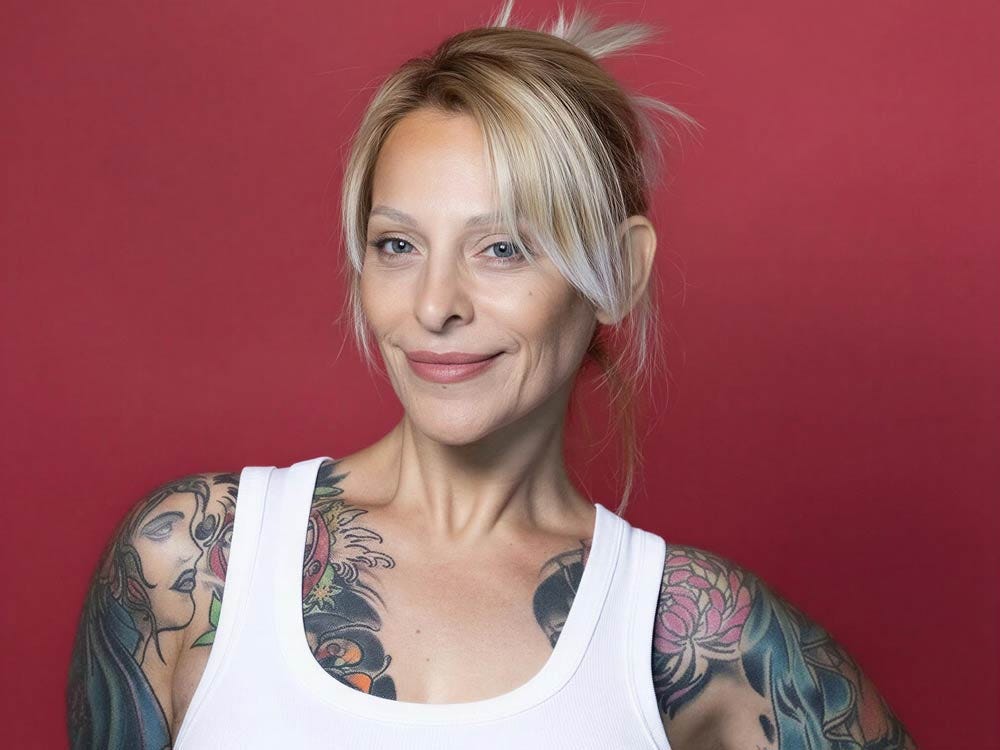
(Sharon Yitzhaki. Provided)
Israeli woman Sharon Yitzhaki was only 20 when she was given a years-long sentence to the Mira Flores Prison, a women’s prison in Bolivia. The charge was drug smuggling; Yitzhaki maintains her innocence in the memoir, describing a situation in which she became caught up in events after having traveled to Bolivia with a man she didn’t know as well as she thought she did. In her memoir 10 Kilos of Cocaine Yitzhaki recounts the ordeal of surviving for the better part of five years in that prison; the film version of the memoir, directed by Doron Eran, shortens the title to 10 Kilos and changes some details, but remains a harrowing account of the perils Yitzhaki faced, and the ways she had to adapt.
Yitzhaki (played in the film by Israeli actor wasn’t simply surviving for herself. While in prison she befriended a transgender woman, Teri, and fostered an infant girl. The three became a family in their own right, a crucial element of the story that Eran’s movie version honors. This emotional focus is a counterweight to the depiction of Yitzhaki becoming the very drug dealer and cartel associate, within the prison’s walls, that she had been accused of being in the first place. More importantly, it’s the need to protect her family that allows Yitzhaki, as portrayed in the film, to remain sympathetic even as she learns to be as ruthless as the prison’s hardened criminals.
The film is many things in one: Tender family drama, survival story, revenge thriller, and redemption epic. But the events of the movie, which took place in the 1990s, are only one part of Yitzhaki’s life. She has since become an entrepreneur, founding her own women’s wear line, examples of which are visible in the background as she logs into a Zoom chat about the movie.
Yitzhaki is perfectly amenable to discussing the film, the memoir, and the prison ordeal that both are based upon, speaking openly and optimistically about the experience and the ways in which it still resonates in her life. (For one thing, she and Teri remain in close contact; “Of course, we are not a couple,” Yitzhak says, “but we are really good friends.”
Sharon Yitzhaki dove deep into her life and insights in our conversation. Read on to see what more she had to say.
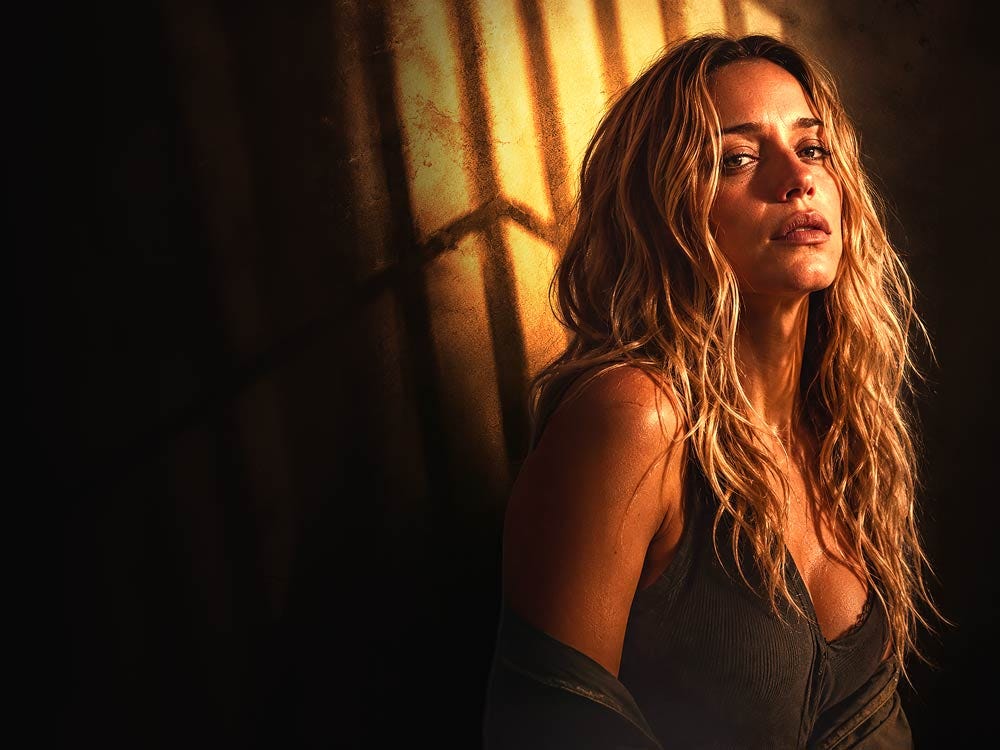
(Daniella Kertesz as Sharon Yitzhaki in 10 Kilos. Breaking Glass Pictures)
Kilian Melloy: Does seeing your story represented onscreen bring back memories you’d rather not have, or is it a cathartic experience?
Sharon Yitzhaki: It was very difficult, actually. When I got to the set in Guatemala, where we filmed the movie, it was very hard for me because the set was exactly the same. It was like re-living it. After a couple of days, I got used to it, but after 10 or 13 days I had to get out of there.
Kilian Melloy: Obviously, there’s been artistic license when it comes to adapting your memoir to film. Were major elements changed for the movie?
Sharon Yitzhaki: The most important thing that changed was the little girl that I adopted. In the movie you see her something like 10 years old, and in real life I got her when she was only one month old. She was really small. But because we needed her to speak and to be a part of the of the characters, the movie made her a little bit bigger.
Also, when I got to prison, Teri wasn’t there yet. She came after me, and in the movie she’s already there. Those two [things] were very necessary to change so the drama and everything would be easier. It’s very hard to take four and a half years of prison and to push it into a two-hour movie. You need to use every trick you can.
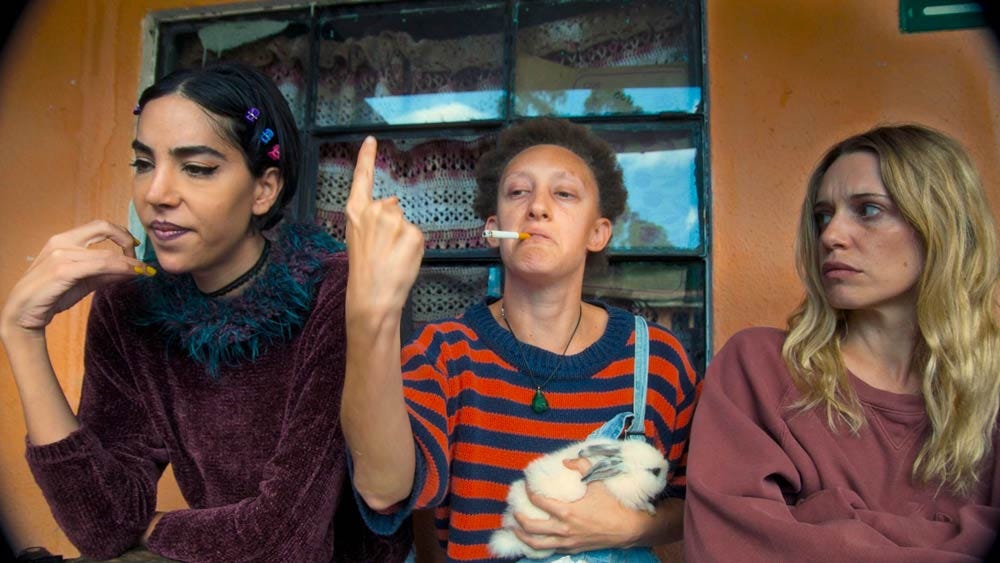
(Lioz Levy, Maya Eshet, and Daniella Kertesz in 10 Kilos. Breaking Glass Pictures)
Kilian Melloy: A central part of the movie is Sharon’s friendship with Teri, who is a transgender woman in prison. It’s a terrible thing that prisons like that exist, but at least Teri was allowed to be in a prison that conformed with her gender identity. That is not universally true.
Sharon Yitzhaki: No, it wasn’t like that at all. I don’t know if today it’s allowed, but what happened is that the judge that was on the case of Teri was a very open-minded woman. When Teri got to prison, I called the judge and explained to her that if Teri [went] to the men’s prison she would die, and the blood would be on her hands. She really didn’t understand it fully, but she agreed to leave her there with us in [the women’s] prison. When Teri got arrested, she was with the passport of a woman, so everything was a mess, but the judge was very nice and said, “Okay, let’s leave it like that,” because Teri was very young. She was only 19, and the judge was afraid that something bad would happen to her. Actually, Teri was the first transgender person that [completed] all her sentence in women’s prison.
Kilian Melloy: You found solidarity with Teri and with the child you took in and looked after. You formed something of a family.
Sharon Yitzhaki: We did. We were really good friends because we were both foreigners and we were very different from the Bolivians, and we spoke a different language. We were the aliens there, and she really needed my help. I was there already two and a half years when Teri got in prison, so I didn’t want her to [suffer] what I what I had when I got to prison. I wanted to protect her and watch [out] that nobody will cause her pain or anything, so it was a very good thing to start. After that, I got Iris as a baby, and we became a family, and fell in love, and have a very, very good relationship until today.
Kilian Melloy: The film does not turn the character Sharon into a saint. She adapts to prison life; she learns to be tough, and even brutal when she needs to be. Is that genuine to your own experience?
Sharon Yitzhaki: Yes, it is, because, you know, it’s prison. It’s not boarding school. There’s dangerous people there, and you have to adapt very fast because if you will not act like them, you will be used, and you don’t want to be used in prison. You don’t want to get beaten. You don’t want to be a slave. You have to catch your place. You have to show that nobody can [mess] with you.
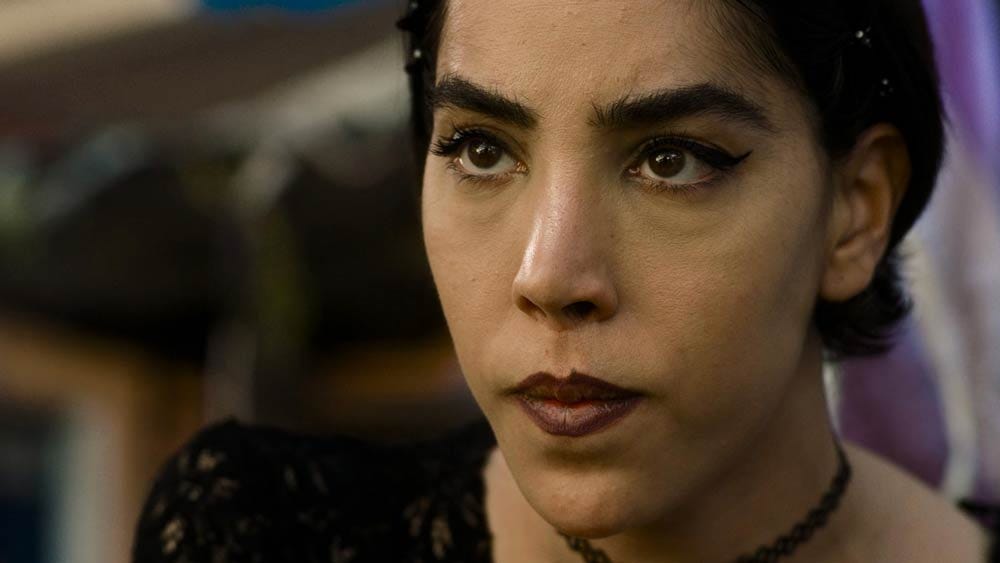
(Lioz Levy in 10 Kilos. Breaking Glass Pictures)
Kilian Melloy: How has that carried over into your life since then?
Sharon Yitzhaki: In personal life it’s different for me. I’m a very gentle person. I’m not as you see in the movie. When I got out of prison I built my character again to be part of society and to get along with people. In my character before I got to prison, I’m a very hippie girl. I’m a flower girl: I love everybody, and I love harmony, and I believe that everybody should get everything. So, I’m not that pushy and brutal as you see in prison. I’m very soft and gentle and patient. I have to act in prison.
Kilian Melloy: It might be a great thing for young people who are starting up the wrong path to see this film and realize that other alternatives exist.
Sharon Yitzhaki: One of the reasons that I’m telling my story all these years and going to lecture in front of young people is because I want them to know that they have to be careful. They have to look around. There are a lot of dangers; they have to be aware of them. They have to be very [careful] not trust people all the time, even if they are the people [that] should be [most trusted] in your life. Like my partner; he was my partner, and you see what happened. If something is not right, it’s not right. It’s not just a feeling; usually, it’s true.
Kilian Melloy: Just as the film doesn’t make a saint out of Sharon, there are the people who could be depicted as really just evil, but they’re given dimension and nuance. In the case of the cartel boss, we hear he doesn’t believe in taking from people who are already miserable, which I think puts him in a higher moral category than 90% of the CEOs who run things these days.
Sharon Yitzhaki: In the book, something that was very important to me was to make all the people human beings. Maybe they have to do things that they were born into, like most of the cartel people, so they are growing up knowing only this. They still have feelings. They still want love. They still want to feel safe. They still want to have family, to have stability. In prison I was sitting with murderers, drinking my coffee morning, and, in those moments, you forget what they did, you forget where you are. You are just two people drinking coffee. It was something that I really wanted to bring [into that story]. [In] movies, when you see prison, when you see cartels, when you see you see very brutal, vicious people without any feelings who only care about money and drugs, in some way, it’s true — but it’s not all the true. They are still humans, and they have the same wishes as anybody else.
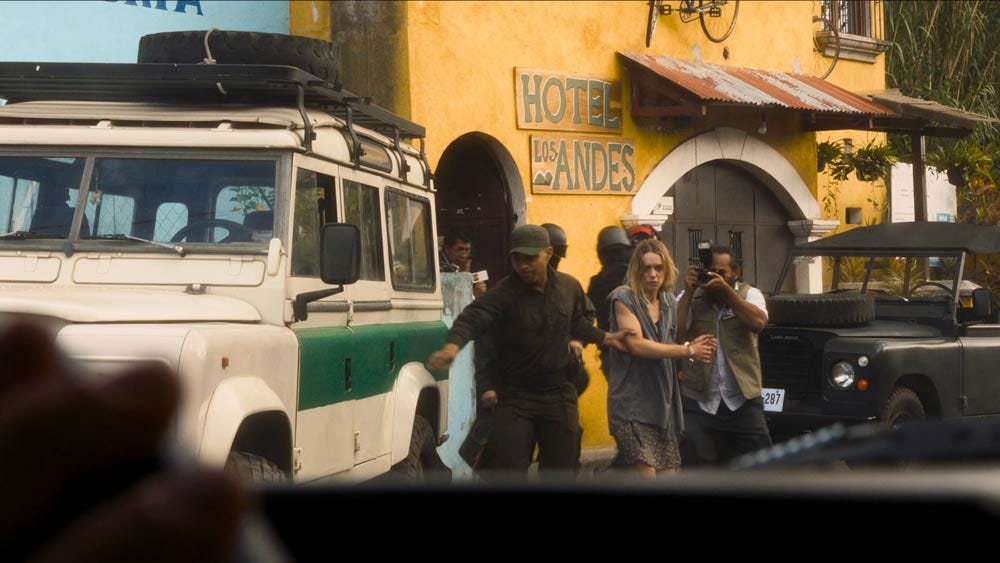
(Daniella Kertesz in 10 Kilos. Breaking Glass Pictures)
Kilian Melloy: Do you have people from that part of your life reach out to you to reconnect, or are there people from that part of your life with whom you would want to reconnect?
Sharon Yitzhaki: Actually, all my friends from that time, I’m still connected with them. Teri [and I] are still friends today. We meet up, or she comes to Israel, or maybe I travel to where she’s living at the moment. All the others in Bolivia, I’m still friends with them on Facebook and WhatsApp; it’s very easy to communicate today. It’s an experience that makes a really strong bond between two people.
Kilian Melloy: The movie makes a point that the so-called war on drugs can create the very criminals that it claims to be working take out of action. Are you hoping this movie and your memoir might spur some reform?
Sharon Yitzhaki: In Bolivia, you mean, or anywhere?
Kilian Melloy: Anywhere.
Sharon Yitzhaki: Oh, I wish that I could have made any change about it, that the police and all of the authorities would really investigate and listen to the person that they arrested. When I got arrested, I wanted them to listen to me: “It’s not mine. There is another person. Look for him.” But they didn’t want it to listen. They just wanted somebody to confess, and to close the case. Success, success, and done. I wish that I can make some of it to change, that they will really listen to the person and see how they can help him, not only to convict him. There is a joke about the narcotics [police] of Bolivia, that if they need to catch a rabbit but they catch a pig, they will convince the rabbit to say that he is a pig.
Kilian Melloy: Watching the movie, it really did seem like the life in prison was a microcosm of the wider society.
Sharon Yitzhaki: I will say that all that you see in the movie is a taste of what really was. We were there only 60 women; the smaller it is, the messier it is, because in big prisons there are big communities. There is always the religious ones, the artist ones. It was only us, and it was very small, so every little thing was like a bomb there. We didn’t have anywhere to escape from each other. We had a lot of problems there because we didn’t have enough space.
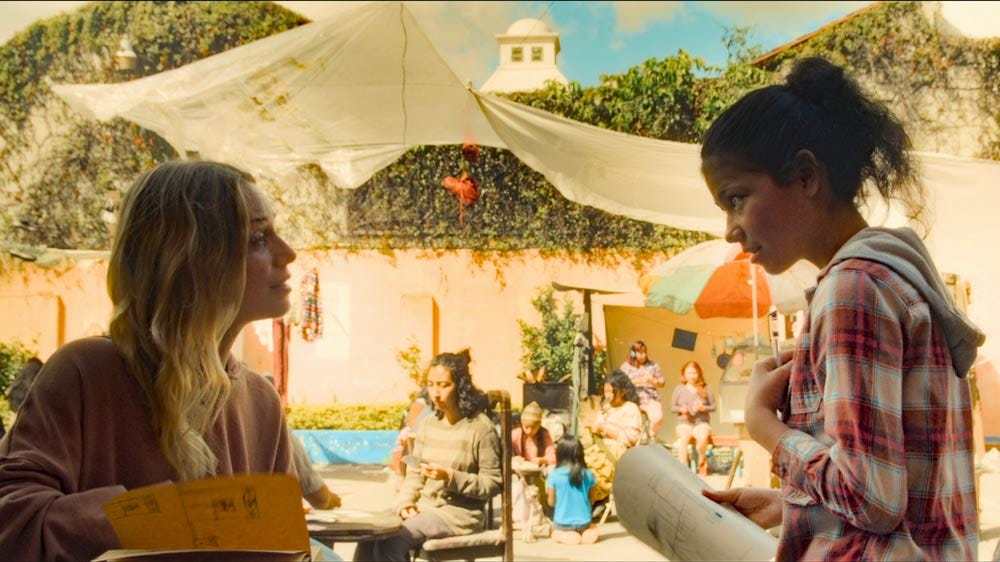
(Daniella Kertesz and Stefany Merida in 10 Kilos. Breaking Glass Pictures)
Kilian Melloy: It sounds like everything was intensified: The fear, the rage, but maybe also the joy. There are moments of celebration and happiness in the film.
Sharon Yitzhaki: Yes, it wasn’t all bad. We had there really good times, bonding times, community times — you know, a lot of girls together. We had a lot of kids there, also; we were 60 prisoners with 40 kids. The kids brought a lot of happiness and saved us, a lot of times, from ourselves. Sometimes things that could have escalated were stopped because the kids were around. So, we had a lot of happy stuff, also, in the holidays, and celebrating all kinds of achievements of the kids, and birthdays. It was a community.
Kilian Melloy: What do you hear from people who’ve seen the movie or read the memoir? Do people say, “I was in prison and this helped me sort that experience for myself,” or, “I never understood the sorts of things people in that situation had to deal with?” Or, on the other hand, or, do you have to deal with people who are judgmental?
Sharon Yitzhaki: I deal with everything. People ask me any question you can imagine about it, but mostly I’m hearing a lot of compassion. People are [talking to me] about the movie, saying, “Oh my God, it was so difficult. I’m so proud of you.” The reactions to the book are a little bit different; people are telling me that it gave them strength to deal with a lot of problems in their life because it gave them hope that they can cope with any situation. But also, there are judgmental people telling me I deserved that, and all kinds of stuff. But it’s okay. I’m not judging anybody about any comment.
Kilian Melloy: Would you want to write another memoir about what came next, like a memoir of a businesswoman, or a book along the lines of “things I’ve learned in my life, which has included some extraordinary experiences?”
Sharon Yitzhaki: I’m thinking about it actually. I’m writing another script, and another book — fictional, of course. But also, I’m writing a handbook of how to deal with life, how to manage all kinds of situations that happen in life and give hope and help to people.
“10 Kilos” opens in limited theatrical release August 21, followed by a release on streaming services Sept. 29.