
Finley Freibert Talks Pat Rocco's Lost Masterpiece, 'Drifter'
After fifty years of obscurity, the "West Coast response to 'Midnight Cowboy' " got the star treatment from Kino Lorber. Film historian Friebert tells us more.

Pat Rocco was a trailblazing filmmaker who, in the 1960s and 1970s, was pioneering serious cinematic work that treated queer people — well, as people: Complex, contradictory, driven to find happiness in a world determined to exclude and make them miserable. “Pat Rocco’s films were different than something like Kenneth Anger or Andy Warhol, or even Jack Smith,” Assistant Professor of Media Studies and LGBTQ+ film historian Finley Friebert explains. “They weren’t really in that kind of underground experimental avant garde sensibility. His films were more geared towards romance or even comedy, traditional genres, and that comes out of his history of being in the showbiz industry.”
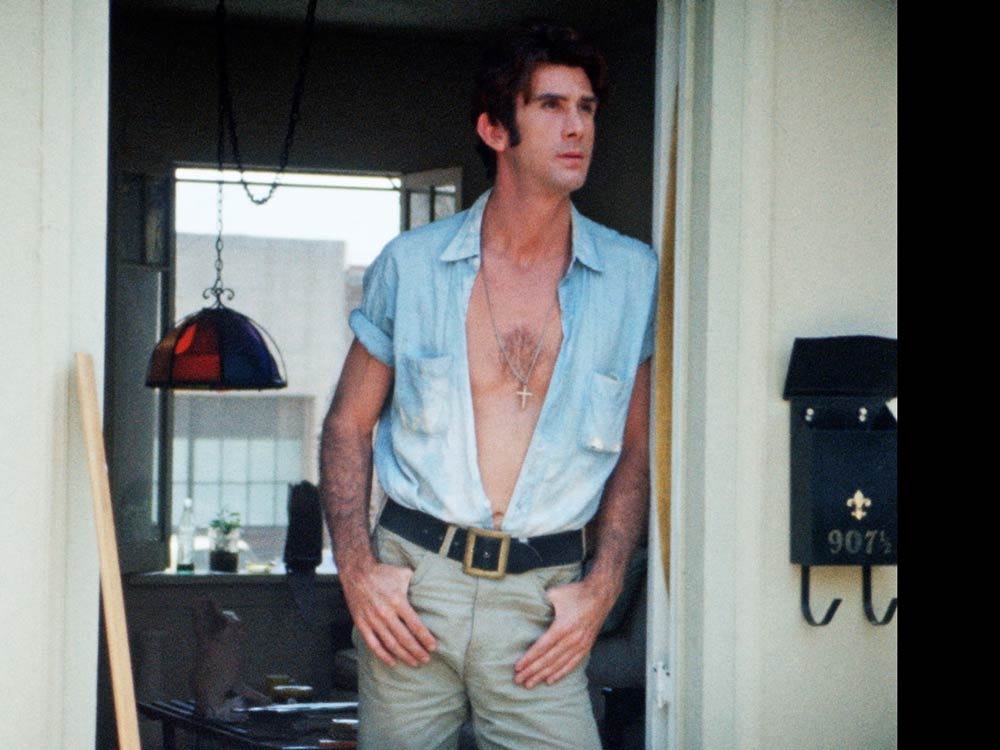
(Photo: Joed Adair in Drifter. Kino Lorber, provided)
As a member of that industry, Freibert was looking to reflect queer joy in film and bring it to mainstream audiences. He was swimming upstream in a deeply homophobic society, but his movies — his short films in particular — challenged the assumptions the straight world inflicted on the queer community and celebrated queer culture and resilience.
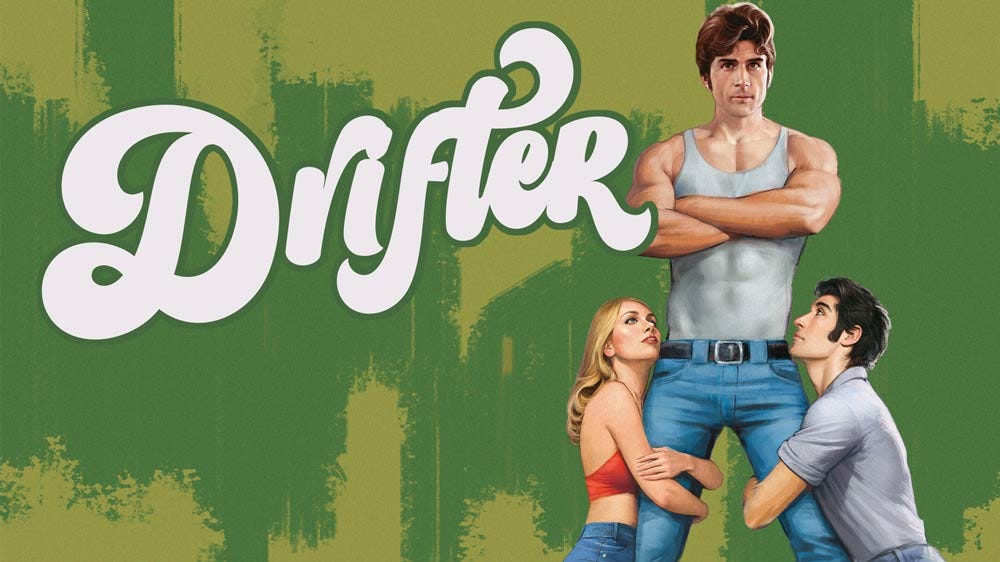
Freibert spoke at length about Rocco and his contributions in an interview about Kino Lorber’s 2K restoration of his little-seen (practically “long lost,” after half a century of neglect) third feature film, Drifter, which stars Rocco’s friend Joed Adair. The story of a bisexual hustler on a quest, Drifter was, the Kino Lorber press notes say, a “West Coast response to Midnight Cowboy,” which was filmed the same year as Drifter — though Drifter’s release was delayed several years. Freibert recounted the story and offered his thoughts about why Drifter remains relevant and compelling.
Kilian Melloy: The press notes point out that Drifter was a response to Midnight Cowboy. Why didn’t Drifter get the same sort of attention and acclaim?
Finley Freibert: Drifter was meant as a crossover film. It showed at the Cannes Film Festival in 1974. It got picked up by a distributor there, but didn’t get a wider release, [though] they showed it at a few theaters. I don’t know why it wasn’t successful. Possibly, it just didn’t get the kind of advertising backing that it would have needed to create a crossover audience. Another complication is that it came out in 1975, several years after Midnight Cowboy. It was originally shot in 1969 [the same year Midnight Cowboy was released], and there were numerous issues with the audio recording on the film, so they had to re-record some of the audio, and they had to reshoot some of the scenes. They didn’t get the film out right on the heels of Midnight Cowboy.
Kilian Melloy: How does Drifter resonate with us today?
Finley Freibert: Rocco was part of the gay liberation movement, so this is kind of an attempt to create a politicized film. That resonates in almost every historical moment, but particularly our own when we have significant repression of gay people — and of trans people, particularly — and that’s a political issue that is constantly being touched on by conservatives as a talking point. If we can create a politicized cinema that reaches a popular audience, if we have films that are showing queer people in their everyday life, maybe people will get more acclimated to seeing queer people in their everyday life and not be so discriminatory.
Kilian Melloy: Joed Adair appears in the main role in Drifter, and also in one of the four short films by Rocco that are included in the Blu-Ray release. Was he a frequent collaborator?
Finley Freibert: There’s a complicated relationship between Joed Adair and Pat Rocco. From my archival research, and what I’ve been able to gather, they cultivated a friendship when Rocco was living in Moorpark, California and running a theater. Joed was an employee of Rocco’s there.
They were doing things in live theater in Los Angeles around 1967, ’68. And ’68 is when Rocco crossed over to start to make films; he involved basically everyone he knew, [including] Joed Adair. There’s a quote from an interview to the effect of, Rocco felt like he owed Joed something and he wanted to make him a star. That’s kind of what we see in Drifter.
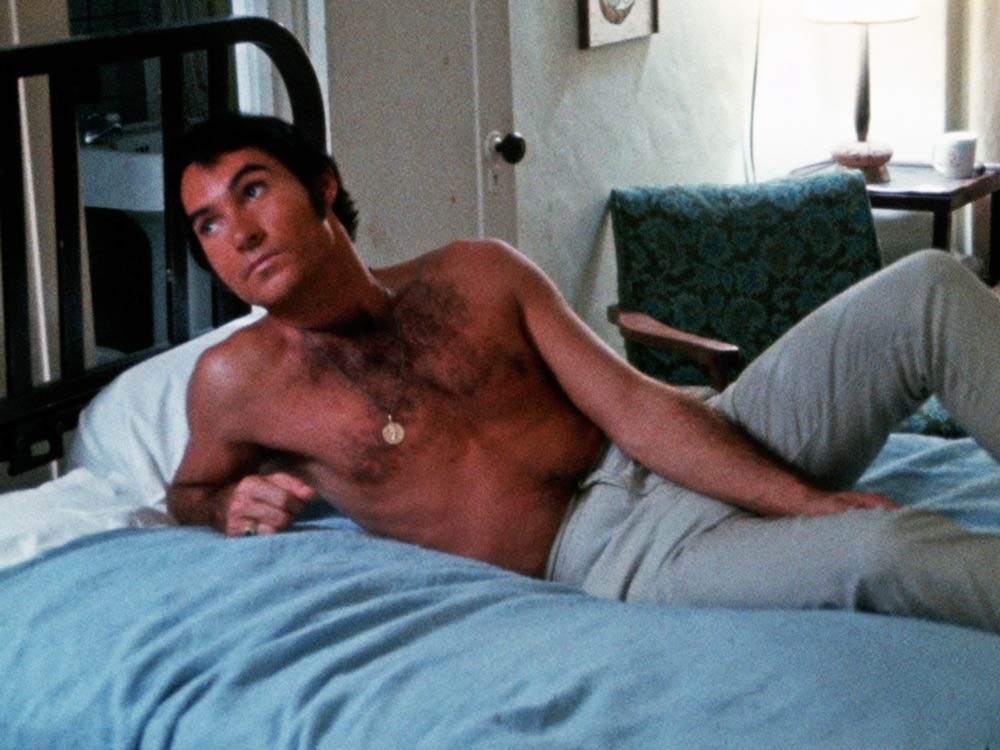
(Photo: Joed Adair in Drifter. Kino Lorber, provided)
They made another feature-length film called Someone that’s almost a dry run for Drifter. It has a similar hustler/sex worker type of storyline. That one was shot in 1968 and came out that year. Joed Adair was the star of that, as well.
Adair was a creative person. I believe he was a painter, and he was also writing scripts. Autumn Nocturne was a script that he wrote [under the pseudonym Edward Middleton], [though] he doesn’t appear in that film. That’s one of the short films that’s a special feature [on the Drifter Blu-ray]. And then, A Matter of Life — he wrote that one and starred in it as well. That’s, once again, a hustler narrative. Joed wrote both Someone and Drifter for Rocco, and then starred [in Drifter].
Kilian Melloy: Of the four short films, I think Autumn Nocturne is the best. It could have been a feature in its own right; everything about it seems so polished and assured.
Finley Freibert: Autumn Nocturne came out in 1968. It was a short that was featured alongside of Someone. As you mentioned, Autumn Nocturne has a kind of sensibility that’s very advanced and complex for the shorts that Rocco was making.
Kilian Melloy: I love another of the short films included on the release, Sunny Boys. It’s such a cute little slice of gay life.
Finley Freibert: That’s what he would become to be known for, those happier romantic, even utopian, films.
Kilian Melloy: The short film Strip Strip is a hilarious visual pun, but was some there some other level to it I was missing? I didn’t see a particular message, like the one in Sunny Boys — “You can be gay and meet the love of your life in the woods.” It’s just this funny sketch about a guy walking up the street, with neon signs going by, and he’s stripping his clothes off. He’s on the strip, and he’s stripping.
Finley Freibert: People have interpreted that as reclaiming the street, claiming a place in public life. At the time, it was very difficult to be out. Gay Liberation was trying to change that. But walking down the street holding another man’s hand, you would have been a target of violence in some cases, and so Rocco oftentimes depicts men, sometimes nude, walking down the street as a transgressive or critical take on public space and reclaiming that public space for gay men. He has another famous film called A Breath of Life where a man streaks down the street and then runs down the Hollywood freeway, and they had to do a really complicated scenario to slow down the traffic so that he could do this kind of ballet dance, nude, on the Hollywood freeway. Strip Strip [falls] within that same type of film.
Kilian Melloy: What got you interested in Pat Rocco’s work in the first place?
Finley Freibert: I was doing my graduate work in Southern California, and I read an article by Whitney Strub called Mondo Rocco. [Editor’s Note: The full title of the paper is “Mondo Rocco: Mapping Gay Los Angeles Sexual Geography in the Late-1960s Films of Pat Rocco.”] It’s actually titled after one of Rocco’s films, [which is] different vignettes from everyday life of gay people in Los Angeles. Whitney Strub’s article spearheaded the scholarly work on Pat Rocco, I would say, and I hadn’t really heard of him before reading Strub’s article. I had done research on other queer work in Southern California, but I hadn’t seen any of Rocco’s films, so I started trying to seek them out. They were very difficult to see at that time, so you could only really see them that UCLA.
Rocco had his own mail order business for several years, and he released many of his films on VHS and then, for a short period, on DVD. But unfortunately, he passed away around the time I was getting my research started on him, so I didn’t get a chance to interview him or correspond in any way.
Kilian Melloy: How do you rate Pat Rocco’s work and its significance as compared to someone like Arthur Bressan?
Finley Freibert: Arthur Bressan was working a little bit later. He, too, was engaged with hardcore film, but also making crossover films like Abuse and Buddies. I would say Rocco was more of a grassroots type of filmmaker, because he was engaging these local communities in Los Angeles. Bressan is making interesting and politicized stories as well, but from the history I’ve researched on Bressan I don’t really see that kind of community formation around him. There was a group Rocco developed called S.P.R.E.E., where they would basically put on these quasi-Oscars type of award shows where they gave [recognition to] everyone in the community who’d done something interesting. Maybe they made a play, or maybe they were doing some sort of protest. They’d give them awards, and this community group situation allowed for organizing films. Other filmmakers emerged out of that as well, not just Pat Rocco.
Pat was also involved in gay liberation at the time. He was helping to organize protests [and] marches. Christopher Street West was one of the organizations that was putting on these marches in Los Angeles at the time, and he was heavily involved in that, and he created documentary footage of a lot of these events and protests. In comparison to someone like Arthur Bressan I think he’s more embedded in the community, and has a grassroots sensibility, and also is creating politicized films out of that.
Kilian Melloy: There’s a project to bring all of Arthur Bressan’s movies out in restored editions. Is there any sort of project afoot to do the same thing for the films of Pat Rocco?
Finley Freibert: There are repertory screenings [of Pat Rocco’s films]. All his films are held at UCLA Archives, so I know that UCLA has tried to put certain of his films out and restore them — put them out on YouTube, for example. Those are the kind of more documentary type and politicized type of films that they typically put out there.
Kino Lorber is putting out this Blu-ray. Hopefully, if it does well, other films will be released, but I don’t know of any solidified kind of plan, as of yet, to restore and release Pat Rocco’s films. I hope that will come to fruition.
Kilian Melloy: What other projects have you got going on?
Finley Freibert: I have a book coming out called Nothing Censored, Nothing Gained. It’s basically kind of contextualizing the distribution and exhibition part of the industry where Rocco was working. So, I look at theater owners and distributors in Los Angeles in the 1960s and 1970s who allowed these avenues for queer and LGBTQ+ cinema to emerge.
This interview was initially conducted on February 29, 2024. It has been edited for clarity and length. Drifter, Special Edition was released on January 23, 2024 and is available from Kino Lorber. The 2K restoration includes an audio commentary by Freibert, optional English subtitles, and four short films by Patrick Rocco: Autumn Nocturne (1968, 24 Min.); A Matter of Life (1968, 14 Min. Featuring Joed Adair); Strip Strip (1968, 5 Min.); and Sunny Boys (1968, 3 Min.)